Fú Líng (茯苓), known in English as Poria (Poria cocos), is a neutral, sweet and bland Chinese herb from the Drain damp category. It enters the Heart, Spleen and Kidney channels. Its main action: promotes urination, leaches out Damp.
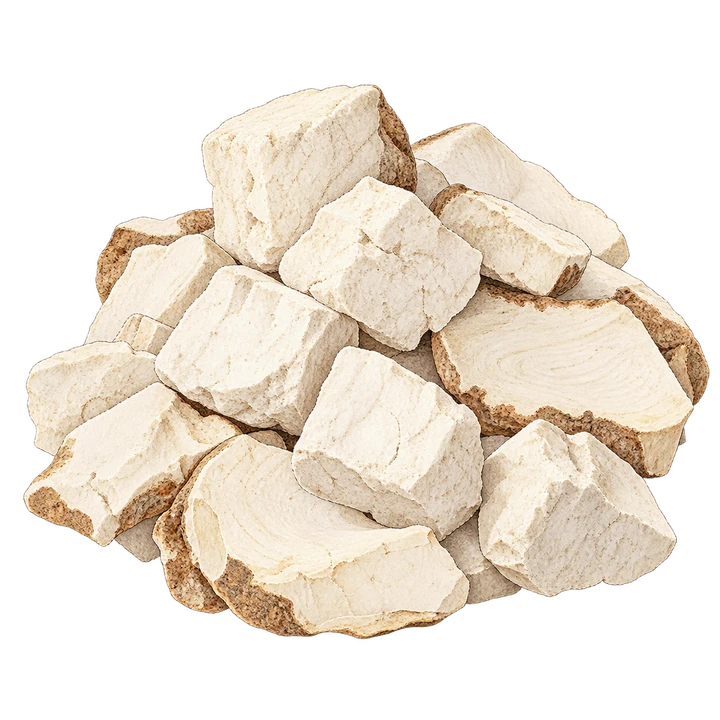
| Pinyin | Fú Líng (Fu Ling) |
|---|---|
| Chinese | 茯苓 |
| English | Poria |
| Botanical name | Poria cocos |
| Category | Drain damp |
| Nature | Neutral |
| Flavour | Sweet, Bland |
| Channels | Heart, Spleen, Kidney |
| Dosage | 9–15g |
| Cautions | Spermatorrhoea or excessive urination without Damp |
Actions
- Promotes urination, leaches out Damp
- Strengthens Spleen, harmonises Middle Jiao
- Calms Shen, nourishes Heart
Indications
- Oedema
- Difficult urination
- Spleen deficiency diarrhoea
- Palpitations and insomnia from Phlegm obstructing Heart
How to remember Fú Líng
Drain damp herbs are mostly cool or cold and sweet, and most enter the Bladder channel.
- You can work these out
- Sweet: like most Drain damp herbs
- Heart channel: from its action “nourishes Heart”
- Spleen channel: from its action “Strengthens Spleen”
- Learn by heart
- Neutral: unusual for Drain damp herbs (most are cool or cold)
- Bland: unusual for Drain damp herbs (most are sweet)
- Kidney channel: nothing in its group or its actions points to it
Formulas containing Fú Líng
- Sì Jūn Zǐ Tāng
- Liù Wèi Dì Huáng Wán
- Zhī Bǎi Dì Huáng Wán
- Jīn Guì Shèn Qì Wán
- Xiāo Yáo Sǎn
- Jiā Wèi Xiāo Yáo Sǎn
- Èr Chén Tāng
- Wēn Dǎn Tāng
- Tiān Wáng Bǔ Xīn Dān
- Suān Zǎo Rén Tāng
- Qīng Jīng Sǎn
- Wǔ Líng Sǎn
- Zhēn Wǔ Tāng
- Nuǎn Gān Jiān
- Bā Zhēn Tāng
- Shí Quán Dà Bǔ Tāng
- Rén Shēn Yǎng Yíng Tāng
- Yǎng Xīn Tāng
- Bǎo Hé Wán
- Bàn Xià Bái Zhú Tiān Má Tāng
- Qǐ Jú Dì Huáng Wán
- Tù Sī Wán
- Dí Tán Tāng
- Ān Shén Dìng Zhì Wán
Other Drain damp herbs
- Yì Yǐ Rén
- Zé Xiè
- Mù Tōng
- Huá Shí
- Chē Qián Zǐ
- Qú Mài
- Bì Xiè
- Yīn Chén Hāo
- Jīn Qián Cǎo
- Hǎi Jīn Shā
- Zhū Líng
- Dēng Xīn Cǎo
- Tōng Cǎo
- Biǎn Xù
- Shí Wéi
- Dōng Kuí Zǐ
- Dì Fū Zǐ
- Dōng Guā Zǐ
Test yourself
What is the nature and flavour of Fú Líng?
Fú Líng is neutral and sweet and bland.
Which channels does Fú Líng enter?
Fú Líng enters the Heart, Spleen and Kidney channels.
What are the actions of Fú Líng?
Promotes urination, leaches out Damp; Strengthens Spleen, harmonises Middle Jiao; Calms Shen, nourishes Heart.
What is Fú Líng used for?
Oedema; difficult urination; Spleen deficiency diarrhoea; palpitations and insomnia from Phlegm obstructing Heart.
Which formulas contain Fú Líng?
Sì Jūn Zǐ Tāng, Liù Wèi Dì Huáng Wán, Zhī Bǎi Dì Huáng Wán, Jīn Guì Shèn Qì Wán, Xiāo Yáo Sǎn, Jiā Wèi Xiāo Yáo Sǎn, Èr Chén Tāng, Wēn Dǎn Tāng, Tiān Wáng Bǔ Xīn Dān, Suān Zǎo Rén Tāng, Qīng Jīng Sǎn, Wǔ Líng Sǎn, Zhēn Wǔ Tāng, Nuǎn Gān Jiān, Bā Zhēn Tāng, Shí Quán Dà Bǔ Tāng, Rén Shēn Yǎng Yíng Tāng, Yǎng Xīn Tāng, Bǎo Hé Wán, Bàn Xià Bái Zhú Tiān Má Tāng, Qǐ Jú Dì Huáng Wán, Tù Sī Wán, Dí Tán Tāng and Ān Shén Dìng Zhì Wán.
Practise Fú Líng and the other 290 herbs
Recognise each herb from its picture, recall its nature, flavour, channels and actions, and review it again just before you would forget it.
Try the 5-question herb quizShen Study is a study tool. Doses and cautions are as taught in standard Chinese materia medica texts; they are not prescribing advice.