Dú Huó (独活), known in English as Pubescent angelica (Angelica pubescens), is a warm, acrid and bitter Chinese herb from the Expel wind-damp category. It enters the Kidney and Bladder channels. Its main action: expels Wind-Cold-Damp, relieves Bi pain — especially lower body.
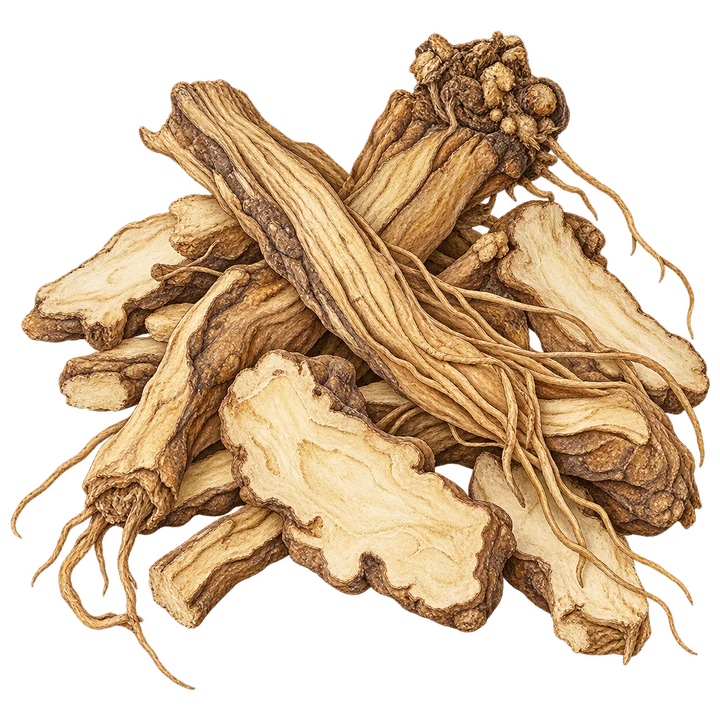
| Pinyin | Dú Huó (Du Huo) |
|---|---|
| Chinese | 独活 |
| English | Pubescent angelica |
| Botanical name | Angelica pubescens |
| Category | Expel wind-damp |
| Nature | Warm |
| Flavour | Acrid, Bitter |
| Channels | Kidney, Bladder |
| Dosage | 3–9g |
| Cautions | Yin deficiency with Heat; Blood deficiency Bi |
Actions
- Expels Wind-Cold-Damp, relieves Bi pain — especially lower body
- Releases exterior Wind-Cold-Damp
Indications
- Wind-Cold-Damp Bi with lower back and leg pain
- Exterior Wind-Cold-Damp (combined with Qiang Huo)
How to remember Dú Huó
Expel wind-damp herbs are mostly bitter, and most enter the Liver and Kidney channels.
- You can work these out
- Bitter, Kidney channel: like most Expel wind-damp herbs
- Learn by heart
- Warm: Expel wind-damp herbs vary in nature
- Acrid: unusual for Expel wind-damp herbs (most are bitter)
- Bladder channel: nothing in its group or its actions points to it
Formulas containing Dú Huó
Other Expel wind-damp herbs
- Qiāng Huó
- Wēi Líng Xiān
- Fáng Jǐ
- Mù Guā
- Sāng Jì Shēng
- Wǔ Jiā Pí
- Luò Shí Téng
- Xī Xiān Cǎo
- Qín Jiāo
- Hǎi Tóng Pí
- Sāng Zhī
- Gǒu Jǐ
- Bái Huā Shé
- Cǎo Wū
- Hǎi Fēng Téng
- Chuān Wū
Test yourself
What is the nature and flavour of Dú Huó?
Dú Huó is warm and acrid and bitter.
Which channels does Dú Huó enter?
Dú Huó enters the Kidney and Bladder channels.
What are the actions of Dú Huó?
Expels Wind-Cold-Damp, relieves Bi pain — especially lower body; Releases exterior Wind-Cold-Damp.
What is Dú Huó used for?
Wind-Cold-Damp Bi with lower back and leg pain; exterior Wind-Cold-Damp (combined with Qiang Huo).
Which formulas contain Dú Huó?
Juān Bì Tāng.
Practise Dú Huó and the other 290 herbs
Recognise each herb from its picture, recall its nature, flavour, channels and actions, and review it again just before you would forget it.
Try the 5-question herb quizShen Study is a study tool. Doses and cautions are as taught in standard Chinese materia medica texts; they are not prescribing advice.