Dì Yú (地榆), known in English as Burnet root (Sanguisorba officinalis), is a cool, bitter and sour Chinese herb from the Stop bleeding category. It enters the Liver, Stomach and Large Intestine channels. Its main action: cools Blood, stops bleeding — Lower Jiao emphasis.
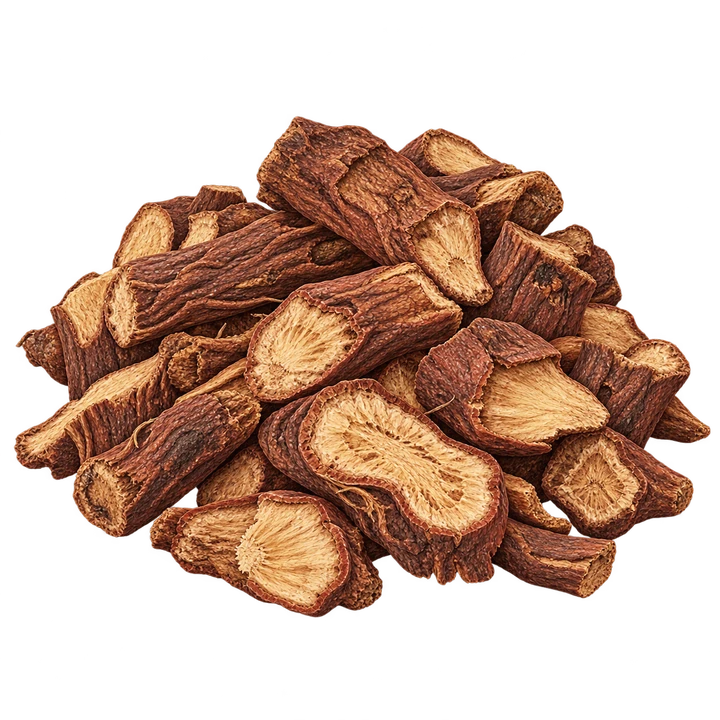
| Pinyin | Dì Yú (Di Yu) |
|---|---|
| Chinese | 地榆 |
| English | Burnet root |
| Botanical name | Sanguisorba officinalis |
| Category | Stop bleeding |
| Nature | Cool |
| Flavour | Bitter, Sour |
| Channels | Liver, Stomach, Large Intestine |
| Dosage | 9–15g |
| Cautions | Cold-deficiency bleeding; large burn surface topical use risk |
Actions
- Cools Blood, stops bleeding — Lower Jiao emphasis
- Resolves toxicity, heals sores (topical)
Indications
- Heat-induced Lower Jiao bleeding: haemorrhoids, bloody stool, uterine bleeding
- Burns (topical)
How to remember Dì Yú
Stop bleeding herbs are mostly cool or cold and bitter, and most enter the Liver channel.
- You can work these out
- Cool, Bitter, Liver channel: like most Stop bleeding herbs
- Learn by heart
- Sour: unusual for Stop bleeding herbs (most are bitter)
- Stomach and Large Intestine channels: nothing in its group or its actions points to them
Other Stop bleeding herbs
- Sān Qī
- Ài Yè
- Huái Huā
- Bái Máo Gēn
- Pú Huáng
- Xiān Hè Cǎo
- Bái Jí
- Qiàn Cǎo Gēn
- Dà Jì
- Xiǎo Jì
- Cè Bǎi Yè
- Ǒu Jié
- Fú Lóng Gān
Test yourself
What is the nature and flavour of Dì Yú?
Dì Yú is cool and bitter and sour.
Which channels does Dì Yú enter?
Dì Yú enters the Liver, Stomach and Large Intestine channels.
What are the actions of Dì Yú?
Cools Blood, stops bleeding — Lower Jiao emphasis; Resolves toxicity, heals sores (topical).
What is Dì Yú used for?
Heat-induced Lower Jiao bleeding: haemorrhoids, bloody stool, uterine bleeding; burns (topical).
Practise Dì Yú and the other 290 herbs
Recognise each herb from its picture, recall its nature, flavour, channels and actions, and review it again just before you would forget it.
Try the 5-question herb quizShen Study is a study tool. Doses and cautions are as taught in standard Chinese materia medica texts; they are not prescribing advice.