Bái Qián (白前), known in English as Cynanchum root (Cynanchum stauntonii), is a warm, acrid and bitter Chinese herb from the Resolve phlegm category. It enters the Lung channel. Its main action: directs qi downward.
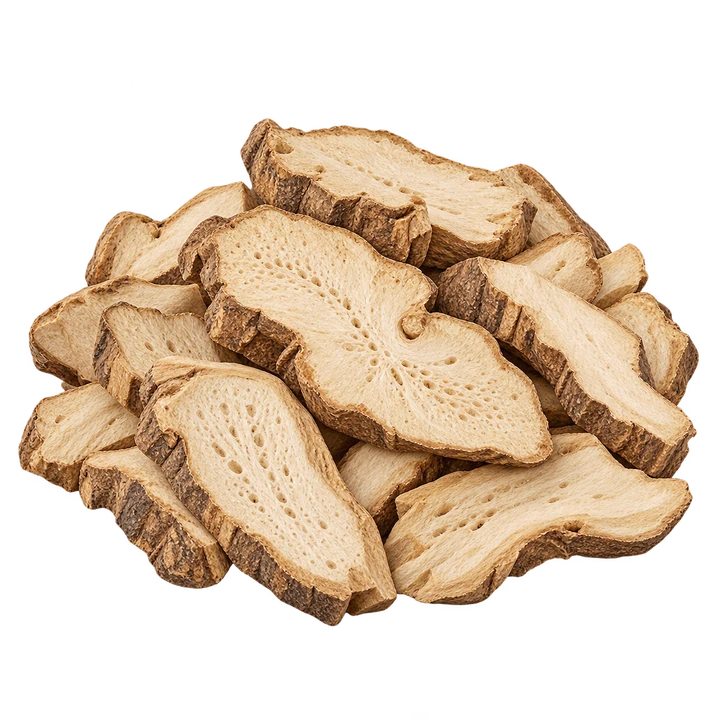
| Pinyin | Bái Qián (Bai Qian) |
|---|---|
| Chinese | 白前 |
| English | Cynanchum root |
| Botanical name | Cynanchum stauntonii |
| Category | Resolve phlegm |
| Nature | Warm |
| Flavour | Acrid, Bitter |
| Channels | Lung |
| Dosage | 3–10g |
| Cautions | Cough from qi deficiency without Phlegm |
Actions
- Directs qi downward
- Dispels Phlegm, stops cough
Indications
- Congested Lung qi with cough, copious Phlegm, chest fullness and wheezing
How to remember Bái Qián
Most Resolve phlegm herbs enter the Lung channel.
- You can work these out
- Lung channel: from its use for “Congested Lung qi with cough, copious Phlegm, chest fullness and wheezing”
- Learn by heart
- Warm: Resolve phlegm herbs vary in nature
- Acrid: Resolve phlegm herbs vary in flavour
- Bitter: Resolve phlegm herbs vary in flavour
Formulas containing Bái Qián
Other Resolve phlegm herbs
- Bàn Xià
- Guā Lóu
- Tiān Nán Xīng
- Zào Jiǎo Cì
- Jié Gěng
- Chuān Bèi Mǔ
- Zhè Bèi Mǔ
- Zhú Rú
- Tiān Zhú Huáng
- Hǎi Zǎo
- Kūn Bù
- Pí Pá Yè
- Xìng Rén
- Zǐ Wǎn
- Bǎi Bù
- Kuǎn Dōng Huā
- Sāng Bái Pí
- Tíng Lì Zǐ
- Bái Jiè Zǐ
- Qián Hú
- Xuán Fù Huā
- Zǐ Sū Zǐ
- Bái Guǒ
- Qīng Méng Shí
Test yourself
What is the nature and flavour of Bái Qián?
Bái Qián is warm and acrid and bitter.
Which channels does Bái Qián enter?
Bái Qián enters the Lung channel.
What are the actions of Bái Qián?
Directs qi downward; Dispels Phlegm, stops cough.
What is Bái Qián used for?
Congested Lung qi with cough, copious Phlegm, chest fullness and wheezing.
Which formulas contain Bái Qián?
Zhǐ Sòu Sǎn.
Practise Bái Qián and the other 290 herbs
Recognise each herb from its picture, recall its nature, flavour, channels and actions, and review it again just before you would forget it.
Try the 5-question herb quizShen Study is a study tool. Doses and cautions are as taught in standard Chinese materia medica texts; they are not prescribing advice.