Xì Xīn (细辛), known in English as Wild ginger (Asarum sieboldii), is a warm, acrid Chinese herb from the Release exterior (Cold) category. It enters the Heart, Lung and Kidney channels. Its main action: disperses Cold, relieves pain strongly.
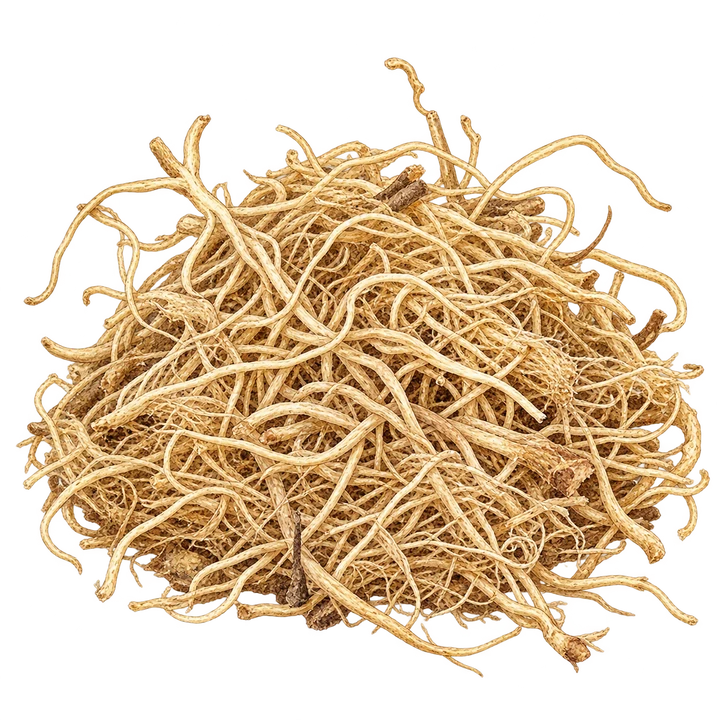
| Pinyin | Xì Xīn (Xi Xin) |
|---|---|
| Chinese | 细辛 |
| English | Wild ginger |
| Botanical name | Asarum sieboldii |
| Category | Release exterior (Cold) |
| Nature | Warm |
| Flavour | Acrid |
| Channels | Heart, Lung, Kidney |
| Dosage | 1–3g |
| Cautions | Qi or Yin deficiency; overdose risk — do not exceed 3g in decoction |
Actions
- Disperses Cold, relieves pain strongly
- Warms Lung, resolves phlegm and fluids
- Opens orifices
Indications
- Wind-Cold with severe headache, toothache, nasal congestion
- Cold phlegm-fluids in Lung
How to remember Xì Xīn
Release exterior (Cold) herbs are mostly warm or hot and acrid, and most enter the Lung channel.
- You can work these out
- Warm, Acrid: like most Release exterior (Cold) herbs
- Lung channel: from its action “Warms Lung”
- Learn by heart
- Heart and Kidney channels: nothing in its group or its actions points to them
Formulas containing Xì Xīn
Other Release exterior (Cold) herbs
- Má Huáng
- Guì Zhī
- Zǐ Sū Yè
- Jīng Jiè
- Fáng Fēng
- Bái Zhǐ
- Cōng Bái
- Shēng Jiāng
- Xīn Yí Huā
- Cāng Ěr Zǐ
- Gǎo Běn
- Xiāng Rú
Test yourself
What is the nature and flavour of Xì Xīn?
Xì Xīn is warm and acrid.
Which channels does Xì Xīn enter?
Xì Xīn enters the Heart, Lung and Kidney channels.
What are the actions of Xì Xīn?
Disperses Cold, relieves pain strongly; Warms Lung, resolves phlegm and fluids; Opens orifices.
What is Xì Xīn used for?
Wind-Cold with severe headache, toothache, nasal congestion; Cold phlegm-fluids in Lung.
Which formulas contain Xì Xīn?
Jiǔ Wèi Qiāng Huó Tāng, Xiǎo Qīng Lóng Tāng, Chuān Xiōng Chá Tiáo Sǎn, Dāng Guī Sì Nì Tāng and Wū Méi Wán.
Practise Xì Xīn and the other 290 herbs
Recognise each herb from its picture, recall its nature, flavour, channels and actions, and review it again just before you would forget it.
Try the 5-question herb quizShen Study is a study tool. Doses and cautions are as taught in standard Chinese materia medica texts; they are not prescribing advice.