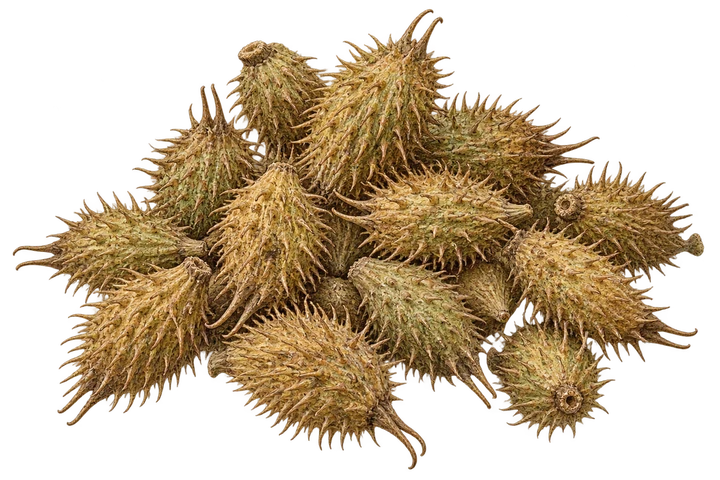
Cāng Ěr Zǐ (苍耳子), known in English as Cocklebur fruit (Xanthium sibiricum), is a warm, acrid and bitter Chinese herb from the Release exterior (Cold) category. It enters the Lung channel. Its main action: disperses Wind-Cold-Damp, opens nasal orifices.
| Pinyin | Cāng Ěr Zǐ (Cang Er Zi) |
|---|---|
| Chinese | 苍耳子 |
| English | Cocklebur fruit |
| Botanical name | Xanthium sibiricum |
| Category | Release exterior (Cold) |
| Nature | Warm |
| Flavour | Acrid, Bitter |
| Channels | Lung |
| Dosage | 3–9g |
| Cautions | Blood deficiency headache; toxic — do not overdose |
Actions
- Disperses Wind-Cold-Damp, opens nasal orifices
- Dispels Wind-Damp, relieves Bi pain
Indications
- Nasal obstruction, sinusitis, rhinitis
- Wind-Damp Bi with headache and body aches
How to remember Cāng Ěr Zǐ
Release exterior (Cold) herbs are mostly warm or hot and acrid, and most enter the Lung channel.
- You can work these out
- Warm, Acrid, Lung channel: like most Release exterior (Cold) herbs
- Learn by heart
- Bitter: unusual for Release exterior (Cold) herbs (most are acrid)
Other Release exterior (Cold) herbs
Test yourself
What is the nature and flavour of Cāng Ěr Zǐ?
Cāng Ěr Zǐ is warm and acrid and bitter.
Which channels does Cāng Ěr Zǐ enter?
Cāng Ěr Zǐ enters the Lung channel.
What are the actions of Cāng Ěr Zǐ?
Disperses Wind-Cold-Damp, opens nasal orifices; Dispels Wind-Damp, relieves Bi pain.
What is Cāng Ěr Zǐ used for?
Nasal obstruction, sinusitis, rhinitis; Wind-Damp Bi with headache and body aches.
Practise Cāng Ěr Zǐ and the other 290 herbs
Recognise each herb from its picture, recall its nature, flavour, channels and actions, and review it again just before you would forget it.
Try the 5-question herb quizShen Study is a study tool. Doses and cautions are as taught in standard Chinese materia medica texts; they are not prescribing advice.