Sāng Yè (桑叶), known in English as Mulberry leaf (Morus alba), is a cold, sweet and bitter Chinese herb from the Release exterior (Heat) category. It enters the Lung and Liver channels. Its main action: disperses Wind-Heat, clears Lung Heat.
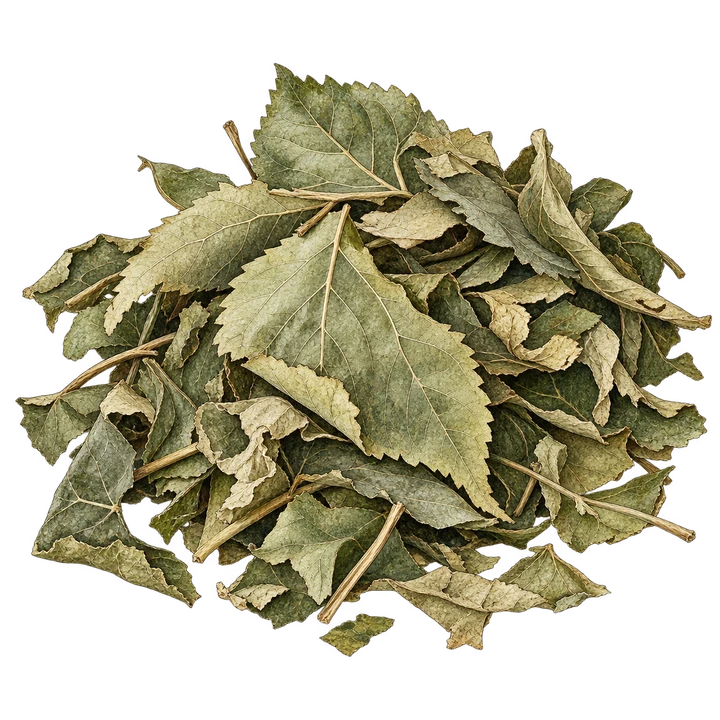
| Pinyin | Sāng Yè (Sang Ye) |
|---|---|
| Chinese | 桑叶 |
| English | Mulberry leaf |
| Botanical name | Morus alba |
| Category | Release exterior (Heat) |
| Nature | Cold |
| Flavour | Sweet, Bitter |
| Channels | Lung, Liver |
| Dosage | 6–12g |
| Cautions | Cold patterns; Spleen deficiency with diarrhoea |
Actions
- Disperses Wind-Heat, clears Lung Heat
- Clears Liver, brightens eyes
- Cools Blood, stops bleeding
Indications
- Wind-Heat with fever, cough, sore throat
- Dry cough from Lung Dryness
- Red eyes
How to remember Sāng Yè
Release exterior (Heat) herbs are mostly cool or cold, acrid and sweet, and most enter the Lung and Liver channels.
- You can work these out
- Cold, Sweet: like most Release exterior (Heat) herbs
- Lung channel: from its action “clears Lung Heat”
- Liver channel: from its action “Clears Liver”
- Learn by heart
- Bitter: unusual for Release exterior (Heat) herbs (most are acrid or sweet)
Formulas containing Sāng Yè
Other Release exterior (Heat) herbs
Test yourself
What is the nature and flavour of Sāng Yè?
Sāng Yè is cold and sweet and bitter.
Which channels does Sāng Yè enter?
Sāng Yè enters the Lung and Liver channels.
What are the actions of Sāng Yè?
Disperses Wind-Heat, clears Lung Heat; Clears Liver, brightens eyes; Cools Blood, stops bleeding.
What is Sāng Yè used for?
Wind-Heat with fever, cough, sore throat; dry cough from Lung Dryness; red eyes.
Which formulas contain Sāng Yè?
Sāng Jú Yǐn, Qīng Zào Jiù Fèi Tāng and Shā Shēn Mài Dōng Tāng.
Practise Sāng Yè and the other 290 herbs
Recognise each herb from its picture, recall its nature, flavour, channels and actions, and review it again just before you would forget it.
Try the 5-question herb quizShen Study is a study tool. Doses and cautions are as taught in standard Chinese materia medica texts; they are not prescribing advice.