Chái Hú (柴胡), known in English as Bupleurum (Bupleurum chinense), is a cool, bitter and acrid Chinese herb from the Release exterior (Heat) category. It enters the Liver and Gallbladder channels. Its main action: resolves lesser Yang disorders (alternating chills and fever).
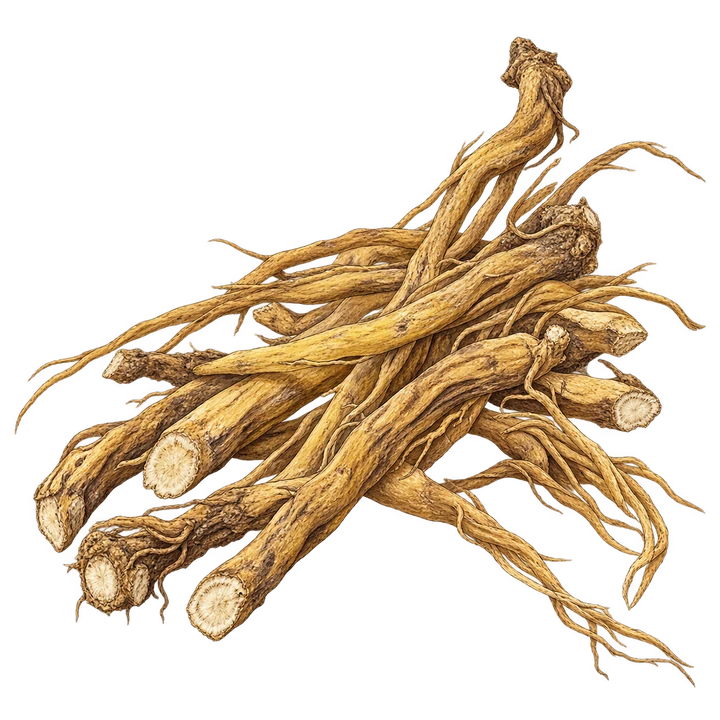
| Pinyin | Chái Hú (Chai Hu) |
|---|---|
| Chinese | 柴胡 |
| English | Bupleurum |
| Botanical name | Bupleurum chinense |
| Category | Release exterior (Heat) |
| Nature | Cool |
| Flavour | Bitter, Acrid |
| Channels | Liver, Gallbladder |
| Dosage | 3–9g |
| Cautions | Yin deficiency with ascending Fire; Liver Wind |
Actions
- Resolves lesser Yang disorders (alternating chills and fever)
- Spreads Liver qi, relieves stagnation
- Raises Yang qi, lifts prolapse
Indications
- Shao Yang syndrome
- Liver qi stagnation with flank pain
- Prolapse of organs
- Menstrual irregularity from Liver constraint
How to remember Chái Hú
Release exterior (Heat) herbs are mostly cool or cold, acrid and sweet, and most enter the Lung and Liver channels.
- You can work these out
- Cool, Acrid: like most Release exterior (Heat) herbs
- Liver channel: from its action “Spreads Liver qi”
- Learn by heart
- Bitter: unusual for Release exterior (Heat) herbs (most are acrid or sweet)
- Gallbladder channel: nothing in its group or its actions points to it
Formulas containing Chái Hú
- Lóng Dǎn Xiè Gān Tāng
- Bǔ Zhōng Yì Qì Tāng
- Xiāo Yáo Sǎn
- Jiā Wèi Xiāo Yáo Sǎn
- Chái Hú Shū Gān Sǎn
- Xuè Fǔ Zhú Yū Tāng
- Xiǎo Chái Hú Tāng
- Dà Chái Hú Tāng
- Sì Nì Sǎn
Other Release exterior (Heat) herbs
Test yourself
What is the nature and flavour of Chái Hú?
Chái Hú is cool and bitter and acrid.
Which channels does Chái Hú enter?
Chái Hú enters the Liver and Gallbladder channels.
What are the actions of Chái Hú?
Resolves lesser Yang disorders (alternating chills and fever); Spreads Liver qi, relieves stagnation; Raises Yang qi, lifts prolapse.
What is Chái Hú used for?
Shao Yang syndrome; Liver qi stagnation with flank pain; prolapse of organs; menstrual irregularity from Liver constraint.
Which formulas contain Chái Hú?
Lóng Dǎn Xiè Gān Tāng, Bǔ Zhōng Yì Qì Tāng, Xiāo Yáo Sǎn, Jiā Wèi Xiāo Yáo Sǎn, Chái Hú Shū Gān Sǎn, Xuè Fǔ Zhú Yū Tāng, Xiǎo Chái Hú Tāng, Dà Chái Hú Tāng and Sì Nì Sǎn.
Practise Chái Hú and the other 290 herbs
Recognise each herb from its picture, recall its nature, flavour, channels and actions, and review it again just before you would forget it.
Try the 5-question herb quizShen Study is a study tool. Doses and cautions are as taught in standard Chinese materia medica texts; they are not prescribing advice.