Dù Zhòng (杜仲), known in English as Eucommia bark (Eucommia ulmoides), is a warm, sweet Chinese herb from the Tonify yang category. It enters the Liver and Kidney channels. Its main action: tonifies Kidney and Liver, strengthens sinews and bones.
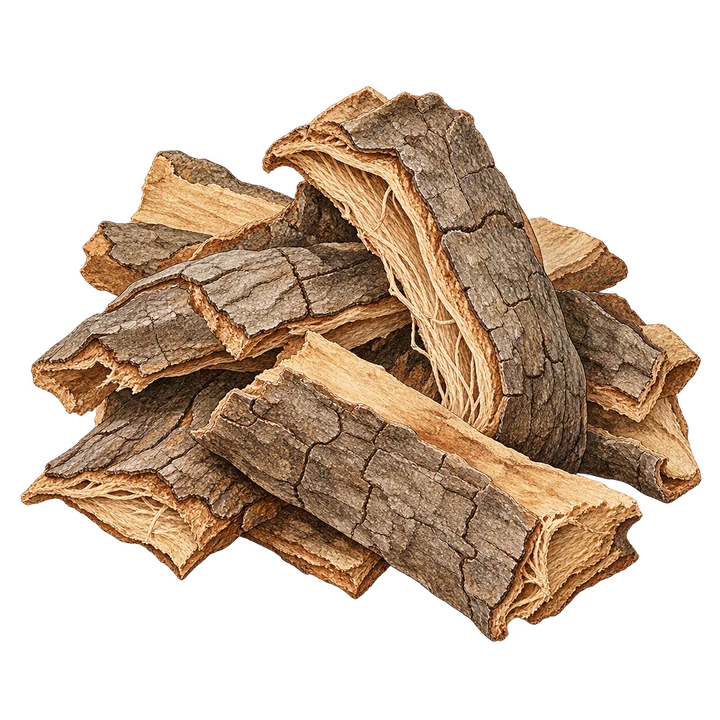
| Pinyin | Dù Zhòng (Du Zhong) |
|---|---|
| Chinese | 杜仲 |
| English | Eucommia bark |
| Botanical name | Eucommia ulmoides |
| Category | Tonify yang |
| Nature | Warm |
| Flavour | Sweet |
| Channels | Liver, Kidney |
| Dosage | 6–15g |
| Cautions | Yin deficiency with Heat; Fire from deficiency |
Actions
- Tonifies Kidney and Liver, strengthens sinews and bones
- Calms foetus, stops threatened miscarriage
- Lowers blood pressure
Indications
- Kidney Yang deficiency: low back pain, weakness of knees
- Threatened miscarriage
- Hypertension
How to remember Dù Zhòng
Tonify yang herbs are mostly warm or hot and sweet, and most enter the Kidney and Liver channels.
- You can work these out
- Warm, Sweet: like most Tonify yang herbs
- Liver and Kidney channels: from its action “Tonifies Kidney and Liver”
Formulas containing Dù Zhòng
Other Tonify yang herbs
- Lù Róng
- Xiān Máo
- Yín Yáng Huò
- Bǔ Gǔ Zhī
- Tù Sī Zǐ
- Bā Jǐ Tiān
- Suǒ Yáng
- Xù Duàn
- Ròu Cōng Róng
- Dōng Chóng Xià Cǎo
- Hé Táo Rén
- Shā Yuàn Zǐ
- Yì Zhì Rén
- Lù Jiǎo Jiāo
Test yourself
What is the nature and flavour of Dù Zhòng?
Dù Zhòng is warm and sweet.
Which channels does Dù Zhòng enter?
Dù Zhòng enters the Liver and Kidney channels.
What are the actions of Dù Zhòng?
Tonifies Kidney and Liver, strengthens sinews and bones; Calms foetus, stops threatened miscarriage; Lowers blood pressure.
What is Dù Zhòng used for?
Kidney Yang deficiency: low back pain, weakness of knees; threatened miscarriage; hypertension.
Which formulas contain Dù Zhòng?
Yòu Guī Wán and Tiān Má Gōu Téng Yǐn.
Practise Dù Zhòng and the other 290 herbs
Recognise each herb from its picture, recall its nature, flavour, channels and actions, and review it again just before you would forget it.
Try the 5-question herb quizShen Study is a study tool. Doses and cautions are as taught in standard Chinese materia medica texts; they are not prescribing advice.