Wǔ Wèi Zǐ (五味子), known in English as Schisandra (Schisandra chinensis), is a warm, sour, sweet, bitter, acrid and salty Chinese herb from the Stabilise & bind category. It enters the Lung, Heart and Kidney channels. Its main action: constrains Lung qi, stops cough and wheezing.
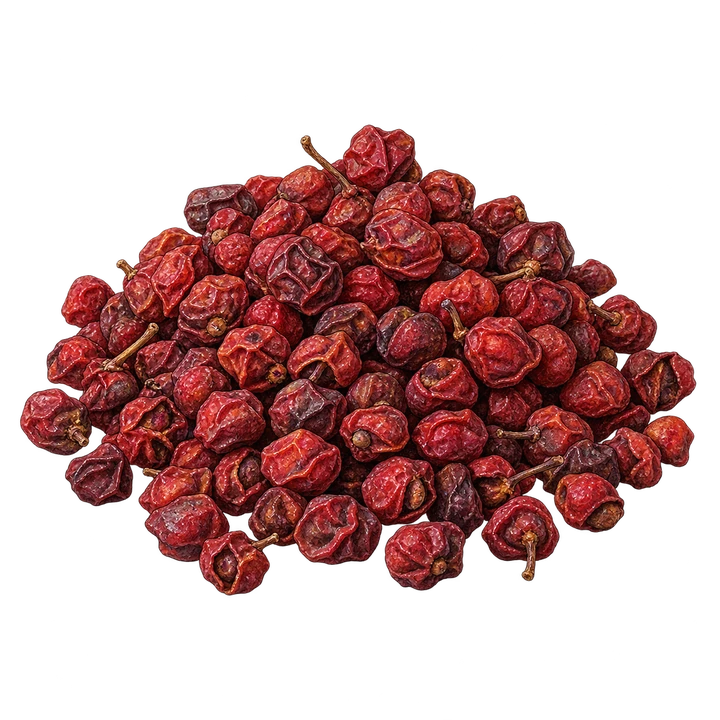
| Pinyin | Wǔ Wèi Zǐ (Wu Wei Zi) |
|---|---|
| Chinese | 五味子 |
| English | Schisandra |
| Botanical name | Schisandra chinensis |
| Category | Stabilise & bind |
| Nature | Warm |
| Flavour | Sour, Sweet, Bitter, Acrid, Salty |
| Channels | Lung, Heart, Kidney |
| Dosage | 1.5–6g |
| Cautions | Early stage exterior patterns; excess Heat patterns |
Actions
- Constrains Lung qi, stops cough and wheezing
- Tonifies Kidney, astringes Jing
- Nourishes Heart, calms Shen
- Generates fluids, stops sweating
Indications
- Chronic cough and wheezing
- Nocturnal emission, spermatorrhoea
- Heart deficiency: insomnia, palpitations
- Spontaneous or night sweats
- Thirst from damaged fluids
How to remember Wǔ Wèi Zǐ
Stabilise & bind herbs are mostly astringent and sweet, and most enter the Kidney channel.
- You can work these out
- Sweet: like most Stabilise & bind herbs
- Lung channel: from its action “Constrains Lung qi”
- Heart channel: from its action “Nourishes Heart”
- Kidney channel: from its action “Tonifies Kidney”
- Learn by heart
- Warm: Stabilise & bind herbs vary in nature
- Sour: unusual for Stabilise & bind herbs (most are astringent or sweet)
- Bitter: unusual for Stabilise & bind herbs (most are astringent or sweet)
- Acrid: unusual for Stabilise & bind herbs (most are astringent or sweet)
- Salty: unusual for Stabilise & bind herbs (most are astringent or sweet)
Formulas containing Wǔ Wèi Zǐ
- Tiān Wáng Bǔ Xīn Dān
- Xiǎo Qīng Lóng Tāng
- Rén Shēn Yǎng Yíng Tāng
- Yǎng Xīn Tāng
- Dà Dìng Fēng Zhū
- Bǔ Fèi Tāng
Other Stabilise & bind herbs
- Shān Zhū Yú
- Jīn Yīng Zǐ
- Qiàn Shí
- Lián Zǐ
- Fú Xiǎo Mài
- Wū Méi
- Ròu Dòu Kòu
- Hē Zǐ
- Chì Shí Zhī
- Chūn Pí
- Fù Pén Zǐ
- Sāng Piāo Xiāo
- Hǎi Piāo Xiāo
- Lián Xū
Test yourself
What is the nature and flavour of Wǔ Wèi Zǐ?
Wǔ Wèi Zǐ is warm and sour, sweet, bitter, acrid and salty.
Which channels does Wǔ Wèi Zǐ enter?
Wǔ Wèi Zǐ enters the Lung, Heart and Kidney channels.
What are the actions of Wǔ Wèi Zǐ?
Constrains Lung qi, stops cough and wheezing; Tonifies Kidney, astringes Jing; Nourishes Heart, calms Shen; Generates fluids, stops sweating.
What is Wǔ Wèi Zǐ used for?
Chronic cough and wheezing; nocturnal emission, spermatorrhoea; Heart deficiency: insomnia, palpitations; spontaneous or night sweats; thirst from damaged fluids.
Which formulas contain Wǔ Wèi Zǐ?
Tiān Wáng Bǔ Xīn Dān, Xiǎo Qīng Lóng Tāng, Rén Shēn Yǎng Yíng Tāng, Yǎng Xīn Tāng, Dà Dìng Fēng Zhū and Bǔ Fèi Tāng.
Practise Wǔ Wèi Zǐ and the other 290 herbs
Recognise each herb from its picture, recall its nature, flavour, channels and actions, and review it again just before you would forget it.
Try the 5-question herb quizShen Study is a study tool. Doses and cautions are as taught in standard Chinese materia medica texts; they are not prescribing advice.