Gān Cǎo (甘草), known in English as Licorice root (Glycyrrhiza uralensis), is a neutral, sweet Chinese herb from the Tonify qi category. It enters the Heart, Lung, Spleen and Stomach channels. Its main action: tonifies Spleen and Stomach qi.
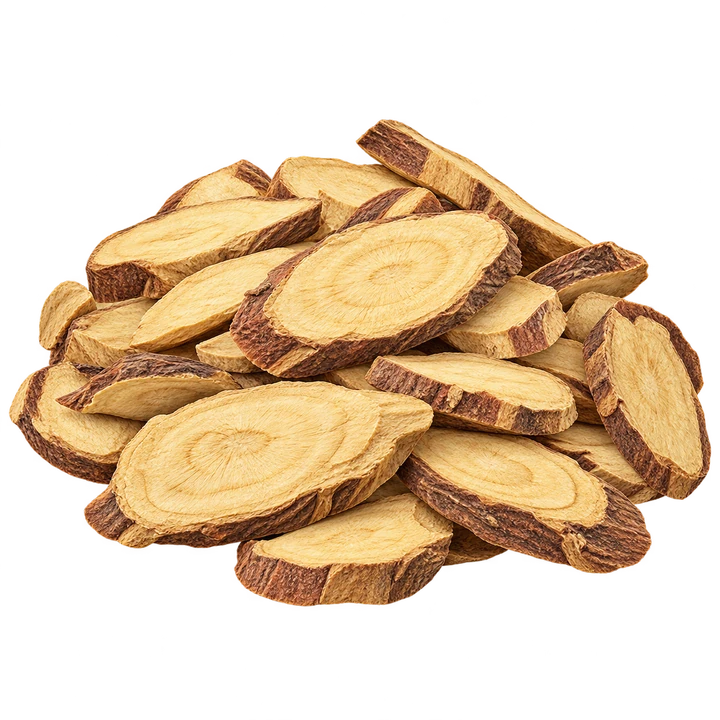
| Pinyin | Gān Cǎo (Gan Cao) |
|---|---|
| Chinese | 甘草 |
| English | Licorice root |
| Botanical name | Glycyrrhiza uralensis |
| Category | Tonify qi |
| Nature | Neutral |
| Flavour | Sweet |
| Channels | Heart, Lung, Spleen, Stomach |
| Dosage | 1.5–9g |
| Cautions | Oedema; hypertension; incompatible with Da Ji, Yuan Hua, Gan Sui, Hai Zao; long-term use causes pseudoaldosteronism |
Actions
- Tonifies Spleen and Stomach qi
- Moistens Lung, stops cough
- Clears Heat, resolves toxicity (raw form)
- Moderates and harmonises actions of other herbs
- Relieves spasmodic pain
Indications
- Spleen qi deficiency
- Cough
- Carbuncles
- Poisoning
- Harmonising herb in most formulas
How to remember Gān Cǎo
Tonify qi herbs are mostly sweet, and most enter the Spleen, Lung and Stomach channels.
- You can work these out
- Sweet: like most Tonify qi herbs
- Lung channel: from its action “Moistens Lung”
- Spleen and Stomach channels: from its action “Tonifies Spleen and Stomach qi”
- Learn by heart
- Neutral: Tonify qi herbs vary in nature
- Heart channel: nothing in its group or its actions points to it
Formulas containing Gān Cǎo
- Má Huáng Tāng
- Guì Zhī Tāng
- Yín Qiào Sǎn
- Sāng Jú Yǐn
- Bái Hǔ Tāng
- Lóng Dǎn Xiè Gān Tāng
- Sì Jūn Zǐ Tāng
- Bǔ Zhōng Yì Qì Tāng
- Guī Pí Tāng
- Xiāo Yáo Sǎn
- Jiā Wèi Xiāo Yáo Sǎn
- Chái Hú Shū Gān Sǎn
- Xuè Fǔ Zhú Yū Tāng
- Èr Chén Tāng
- Wēn Dǎn Tāng
- Píng Wèi Sǎn
- Lǐ Zhōng Wán
- Xiǎo Jiàn Zhōng Tāng
- Sì Nì Tāng
- Suān Zǎo Rén Tāng
- Xiǎo Chái Hú Tāng
- Xiāo Fēng Sǎn
- Jiǔ Wèi Qiāng Huó Tāng
- Xiǎo Qīng Lóng Tāng
- Chuān Xiōng Chá Tiáo Sǎn
- Xiè Bái Sǎn
- Dǎo Chì Sǎn
- Qīng Gǔ Sǎn
- Qīng Zào Jiù Fèi Tāng
- Bā Zhèng Sǎn
- Bàn Xià Xiè Xīn Tāng
- Sì Nì Sǎn
- Gé Xià Zhú Yū Tāng
- Wēn Jīng Tāng
- Shēng Huà Tāng
- Táo Hé Chéng Qì Tāng
- Zhǐ Sòu Sǎn
- Sū Zǐ Jiàng Qì Tāng
- Dìng Chuǎn Tāng
- Fáng Jǐ Huáng Qí Tāng
- Wū Tóu Tāng
- Dāng Guī Sì Nì Tāng
- Huáng Qí Jiàn Zhōng Tāng
- Bā Zhēn Tāng
- Shí Quán Dà Bǔ Tāng
- Rén Shēn Yǎng Yíng Tāng
- Yǎng Xīn Tāng
- Bǎi Hé Gù Jīn Tāng
- Shā Shēn Mài Dōng Tāng
- Zhū Shā Ān Shén Wán
- Guì Zhī Gān Cǎo Lóng Gǔ Mǔ Lì Tāng
- Zhèn Gān Xī Fēng Tāng
- Dà Dìng Fēng Zhū
- Huáng Tǔ Tāng
- Jiāo Ài Tāng
- Jiàn Pí Wán
- Bàn Xià Bái Zhú Tiān Má Tāng
- Sháo Yào Tāng
- Gé Gēn Huáng Qín Huáng Lián Tāng
- Xuán Fù Dài Zhě Tāng
- Dí Tán Tāng
- Juān Bì Tāng
- Má Xìng Shí Gān Tāng
- Zhì Gān Cǎo Tāng
Other Tonify qi herbs
Test yourself
What is the nature and flavour of Gān Cǎo?
Gān Cǎo is neutral and sweet.
Which channels does Gān Cǎo enter?
Gān Cǎo enters the Heart, Lung, Spleen and Stomach channels.
What are the actions of Gān Cǎo?
Tonifies Spleen and Stomach qi; Moistens Lung, stops cough; Clears Heat, resolves toxicity (raw form); Moderates and harmonises actions of other herbs; Relieves spasmodic pain.
What is Gān Cǎo used for?
Spleen qi deficiency; cough; carbuncles; poisoning; harmonising herb in most formulas.
Which formulas contain Gān Cǎo?
Má Huáng Tāng, Guì Zhī Tāng, Yín Qiào Sǎn, Sāng Jú Yǐn, Bái Hǔ Tāng, Lóng Dǎn Xiè Gān Tāng, Sì Jūn Zǐ Tāng, Bǔ Zhōng Yì Qì Tāng, Guī Pí Tāng, Xiāo Yáo Sǎn, Jiā Wèi Xiāo Yáo Sǎn, Chái Hú Shū Gān Sǎn, Xuè Fǔ Zhú Yū Tāng, Èr Chén Tāng, Wēn Dǎn Tāng, Píng Wèi Sǎn, Lǐ Zhōng Wán, Xiǎo Jiàn Zhōng Tāng, Sì Nì Tāng, Suān Zǎo Rén Tāng, Xiǎo Chái Hú Tāng, Xiāo Fēng Sǎn, Jiǔ Wèi Qiāng Huó Tāng, Xiǎo Qīng Lóng Tāng, Chuān Xiōng Chá Tiáo Sǎn, Xiè Bái Sǎn, Dǎo Chì Sǎn, Qīng Gǔ Sǎn, Qīng Zào Jiù Fèi Tāng, Bā Zhèng Sǎn, Bàn Xià Xiè Xīn Tāng, Sì Nì Sǎn, Gé Xià Zhú Yū Tāng, Wēn Jīng Tāng, Shēng Huà Tāng, Táo Hé Chéng Qì Tāng, Zhǐ Sòu Sǎn, Sū Zǐ Jiàng Qì Tāng, Dìng Chuǎn Tāng, Fáng Jǐ Huáng Qí Tāng, Wū Tóu Tāng, Dāng Guī Sì Nì Tāng, Huáng Qí Jiàn Zhōng Tāng, Bā Zhēn Tāng, Shí Quán Dà Bǔ Tāng, Rén Shēn Yǎng Yíng Tāng, Yǎng Xīn Tāng, Bǎi Hé Gù Jīn Tāng, Shā Shēn Mài Dōng Tāng, Zhū Shā Ān Shén Wán, Guì Zhī Gān Cǎo Lóng Gǔ Mǔ Lì Tāng, Zhèn Gān Xī Fēng Tāng, Dà Dìng Fēng Zhū, Huáng Tǔ Tāng, Jiāo Ài Tāng, Jiàn Pí Wán, Bàn Xià Bái Zhú Tiān Má Tāng, Sháo Yào Tāng, Gé Gēn Huáng Qín Huáng Lián Tāng, Xuán Fù Dài Zhě Tāng, Dí Tán Tāng, Juān Bì Tāng, Má Xìng Shí Gān Tāng and Zhì Gān Cǎo Tāng.
Practise Gān Cǎo and the other 290 herbs
Recognise each herb from its picture, recall its nature, flavour, channels and actions, and review it again just before you would forget it.
Try the 5-question herb quizShen Study is a study tool. Doses and cautions are as taught in standard Chinese materia medica texts; they are not prescribing advice.