Dāng Guī (当归), known in English as Chinese angelica (Angelica sinensis), is a warm, sweet and acrid Chinese herb from the Tonify blood category. It enters the Liver, Heart and Spleen channels. Its main action: tonifies and invigorates Blood — primary Blood tonic.
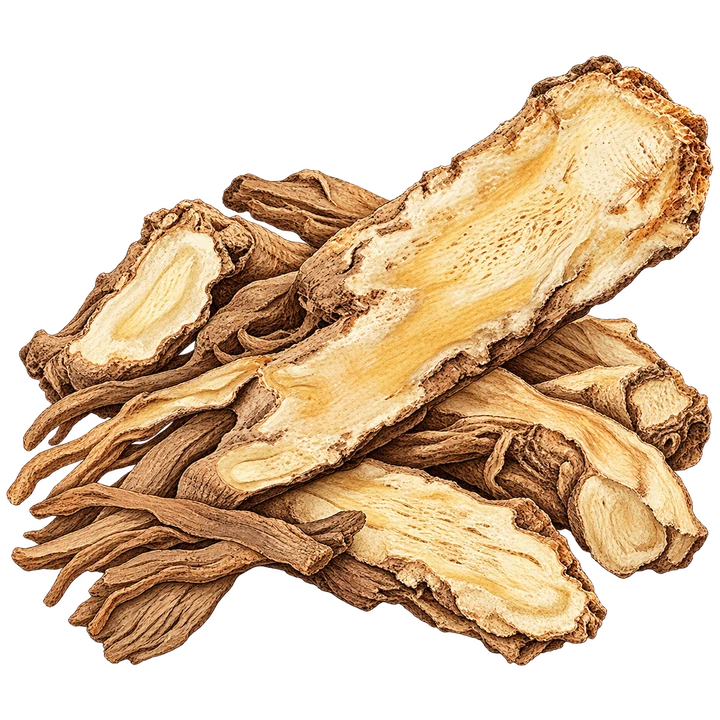
| Pinyin | Dāng Guī (Dang Gui) |
|---|---|
| Chinese | 当归 |
| English | Chinese angelica |
| Botanical name | Angelica sinensis |
| Category | Tonify blood |
| Nature | Warm |
| Flavour | Sweet, Acrid |
| Channels | Liver, Heart, Spleen |
| Dosage | 6–12g |
| Cautions | Diarrhoea; Damp-Heat; pregnancy (use with caution) |
Actions
- Tonifies and invigorates Blood — primary Blood tonic
- Regulates menses and relieves pain
- Moistens intestines, unblocks bowels
- Disperses Cold, stops pain
Indications
- Blood deficiency
- Menstrual irregularity
- Amenorrhoea
- Dysmenorrhoea
- Post-partum Blood deficiency
- Constipation from Blood deficiency
- Wind-Damp Bi
How to remember Dāng Guī
Tonify blood herbs are mostly warm or hot and sweet, and most enter the Liver, Spleen, Heart and Kidney channels.
- You can work these out
- Warm, Sweet, Liver, Heart and Spleen channels: like most Tonify blood herbs
- Learn by heart
- Acrid: unusual for Tonify blood herbs (most are sweet)
Formulas containing Dāng Guī
- Lóng Dǎn Xiè Gān Tāng
- Bǔ Zhōng Yì Qì Tāng
- Sì Wù Tāng
- Guī Pí Tāng
- Xiāo Yáo Sǎn
- Jiā Wèi Xiāo Yáo Sǎn
- Xuè Fǔ Zhú Yū Tāng
- Tiān Wáng Bǔ Xīn Dān
- Xiāo Fēng Sǎn
- Shào Fǔ Zhú Yū Tāng
- Gé Xià Zhú Yū Tāng
- Wēn Jīng Tāng
- Shēng Huà Tāng
- Sū Zǐ Jiàng Qì Tāng
- Dāng Guī Sì Nì Tāng
- Nuǎn Gān Jiān
- Bā Zhēn Tāng
- Shí Quán Dà Bǔ Tāng
- Rén Shēn Yǎng Yíng Tāng
- Yòu Guī Wán
- Yī Guàn Jiān
- Yǎng Xīn Tāng
- Bǎi Hé Gù Jīn Tāng
- Zhū Shā Ān Shén Wán
- Jiāo Ài Tāng
- Wū Méi Wán
- Sháo Yào Tāng
- Juān Bì Tāng
- Qīng Wèi Sǎn
Other Tonify blood herbs
Test yourself
What is the nature and flavour of Dāng Guī?
Dāng Guī is warm and sweet and acrid.
Which channels does Dāng Guī enter?
Dāng Guī enters the Liver, Heart and Spleen channels.
What are the actions of Dāng Guī?
Tonifies and invigorates Blood — primary Blood tonic; Regulates menses and relieves pain; Moistens intestines, unblocks bowels; Disperses Cold, stops pain.
What is Dāng Guī used for?
Blood deficiency; menstrual irregularity; amenorrhoea; dysmenorrhoea; post-partum Blood deficiency; constipation from Blood deficiency; Wind-Damp Bi.
Which formulas contain Dāng Guī?
Lóng Dǎn Xiè Gān Tāng, Bǔ Zhōng Yì Qì Tāng, Sì Wù Tāng, Guī Pí Tāng, Xiāo Yáo Sǎn, Jiā Wèi Xiāo Yáo Sǎn, Xuè Fǔ Zhú Yū Tāng, Tiān Wáng Bǔ Xīn Dān, Xiāo Fēng Sǎn, Shào Fǔ Zhú Yū Tāng, Gé Xià Zhú Yū Tāng, Wēn Jīng Tāng, Shēng Huà Tāng, Sū Zǐ Jiàng Qì Tāng, Dāng Guī Sì Nì Tāng, Nuǎn Gān Jiān, Bā Zhēn Tāng, Shí Quán Dà Bǔ Tāng, Rén Shēn Yǎng Yíng Tāng, Yòu Guī Wán, Yī Guàn Jiān, Yǎng Xīn Tāng, Bǎi Hé Gù Jīn Tāng, Zhū Shā Ān Shén Wán, Jiāo Ài Tāng, Wū Méi Wán, Sháo Yào Tāng, Juān Bì Tāng and Qīng Wèi Sǎn.
Practise Dāng Guī and the other 290 herbs
Recognise each herb from its picture, recall its nature, flavour, channels and actions, and review it again just before you would forget it.
Try the 5-question herb quizShen Study is a study tool. Doses and cautions are as taught in standard Chinese materia medica texts; they are not prescribing advice.