Dà Huáng (大黄), known in English as Rhubarb root (Rheum palmatum), is a cold, bitter Chinese herb from the Drain downward category. It enters the Spleen, Stomach, Large Intestine, Liver and Heart channels. Its main action: drains Heat, purges accumulation.
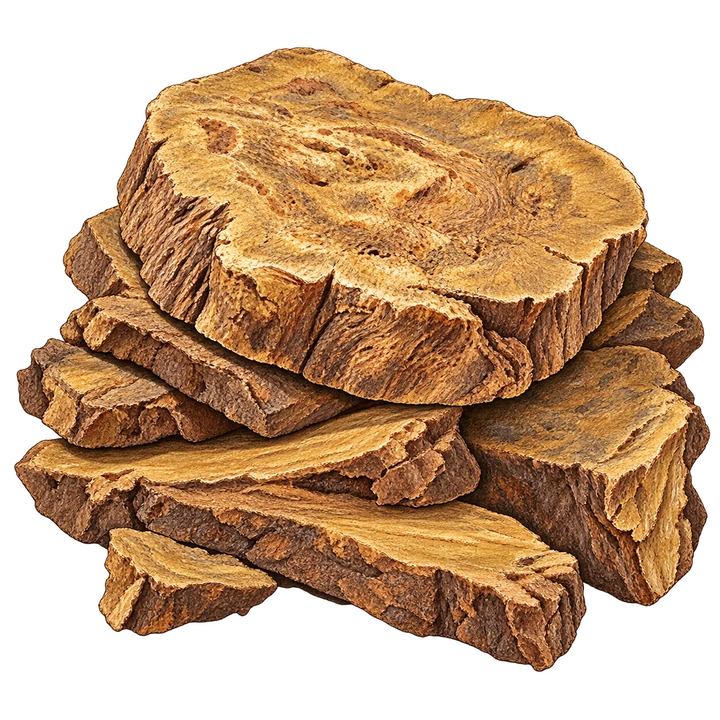
| Pinyin | Dà Huáng (Da Huang) |
|---|---|
| Chinese | 大黄 |
| English | Rhubarb root |
| Botanical name | Rheum palmatum |
| Category | Drain downward |
| Nature | Cold |
| Flavour | Bitter |
| Channels | Spleen, Stomach, Large Intestine, Liver, Heart |
| Dosage | 3–12g (strong: add late; mild: decoct; topical: fresh paste) |
| Cautions | Pregnancy; Spleen/Stomach Cold deficiency; menstruation |
Actions
- Drains Heat, purges accumulation
- Drains Fire, cools Blood
- Invigorates Blood, removes stasis
- Clears Damp-Heat
Indications
- Heat accumulation constipation
- Blood stasis
- Jaundice
- Fire toxicity carbuncles
- Acute appendicitis
How to remember Dà Huáng
Drain downward herbs are mostly cool or cold and bitter, and most enter the Large Intestine and Stomach channels.
- You can work these out
- Cold, Bitter, Stomach channel: like most Drain downward herbs
- Large Intestine channel: from its action “purges accumulation”
- Learn by heart
- Spleen, Liver and Heart channels: nothing in its group or its actions points to them
Formulas containing Dà Huáng
- Yīn Chén Hāo Tāng
- Bā Zhèng Sǎn
- Dà Chái Hú Tāng
- Táo Hé Chéng Qì Tāng
- Gǔn Tán Wán
- Shí Huī Sǎn
- Sháo Yào Tāng
- Má Zǐ Rén Wán
Other Drain downward herbs
Test yourself
What is the nature and flavour of Dà Huáng?
Dà Huáng is cold and bitter.
Which channels does Dà Huáng enter?
Dà Huáng enters the Spleen, Stomach, Large Intestine, Liver and Heart channels.
What are the actions of Dà Huáng?
Drains Heat, purges accumulation; Drains Fire, cools Blood; Invigorates Blood, removes stasis; Clears Damp-Heat.
What is Dà Huáng used for?
Heat accumulation constipation; Blood stasis; jaundice; Fire toxicity carbuncles; acute appendicitis.
Which formulas contain Dà Huáng?
Yīn Chén Hāo Tāng, Bā Zhèng Sǎn, Dà Chái Hú Tāng, Táo Hé Chéng Qì Tāng, Gǔn Tán Wán, Shí Huī Sǎn, Sháo Yào Tāng and Má Zǐ Rén Wán.
Practise Dà Huáng and the other 290 herbs
Recognise each herb from its picture, recall its nature, flavour, channels and actions, and review it again just before you would forget it.
Try the 5-question herb quizShen Study is a study tool. Doses and cautions are as taught in standard Chinese materia medica texts; they are not prescribing advice.